


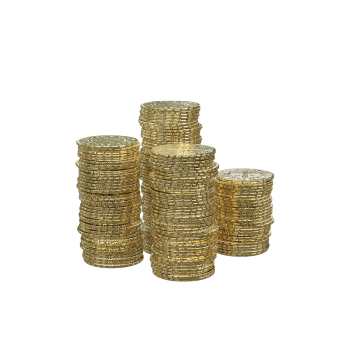
four stacks of gold coins

The Victory Goddess gold coin issued by Mexico in 1917
This 50 peso gold coin, also known as the "Centennial Coin," was minted by the "Mexican Mint" (Casa de Moneda) in 1921 to commemorate the 100th anniversary of Mexico's independence from Spain on August 24, 1821. Coins are not minted as currency; The face value of 50 pesos is for legal purposes only and does not reflect the true value of the gold content. It weighs about 41.7 grams, has a diameter of 37 millimeters, and contains 37.5 grams of pure gold. On the front of the coin, we can see the independent angel representing the Greek goddess of victory, Nike.

1907 Saint Gaudens $20 gold coin
The Saint Gaudens $20 coin was produced by the United States Mint from 1907 to 1933. This gold coin is named after Augustus Saint Gaudens, who designed it. This coin is undoubtedly one of the most popular and beautiful coins in the United States. The $20 gold coin is a coin that is highly valued by investors and numismatists, and is almost loved by anyone who manages to obtain gold coins. For collectors, finding a well preserved 1907 Saint Gaudens $20 gold coin has always been a goal, but it is not an easy one to achieve.

Gold coin of King Bactria Eucratis I in ancient Greece
The coin of the Bactrian king, Eucratis I (c. 171-145 BC) - The Greek Bactrian king who overthrew the House of Eusidmedes and conquered all their property, including Indian property. He misappropriated the title of King of Kings, possibly because not only the rulers of various regions of the Greco Bactrian country obeyed him, but also the local kings of India and other regions of the country obeyed him.

Gold Coin Bitcoin Foreign Coin Commemorative Coin

The Solidus gold coin issued by the Byzantine Empire in 641 AD
During the reign of Heraclius, the portrait of "Hekgram" and Jesus Christ from the reign of Justinian II appeared on coins. At first, attempts to use the portrait of Christ on coinage did not last until the latter half of the 9th century, when the images of Jesus Christ and subsequently the Virgin Mary became more common. By the end of the 10th century, Byzantium had produced a series of unnamed bronze coins and new Ginomismas, which lasted for a long time. In the late period, Byzantine coins gradually deteriorated in terms of metal composition and style, to the point where extremely rough coins of Emperor John VIII Palaiologogus appeared.

The Solidus gold coin issued by the Byzantine Empire in 610 AD
During the reign of Heraclius, the portrait of "Hekgram" and Jesus Christ from the reign of Justinian II appeared on coins. At first, attempts to use the portrait of Christ on coinage did not last until the latter half of the 9th century, when the images of Jesus Christ and subsequently the Virgin Mary became more common. By the end of the 10th century, Byzantium had produced a series of unnamed bronze coins and new Ginomismas, which lasted for a long time. In the late period, Byzantine coins gradually deteriorated in terms of metal composition and style, to the point where extremely rough coins of Emperor John VIII Palaiologogus appeared.

The Solidus gold coin issued by the Byzantine Empire in 582 AD
During the reign of Heraclius, the portrait of "Hekgram" and Jesus Christ from the reign of Justinian II appeared on coins. At first, attempts to use the portrait of Christ on coinage did not last until the latter half of the 9th century, when the images of Jesus Christ and subsequently the Virgin Mary became more common. By the end of the 10th century, Byzantium had produced a series of unnamed bronze coins and new Ginomismas, which lasted for a long time. In the late period, Byzantine coins gradually deteriorated in terms of metal composition and style, to the point where extremely rough coins of Emperor John VIII Palaiologogus appeared.

The Solidus gold coin issued by the Byzantine Empire in 535 AD
During the reign of Heraclius, the portrait of "Hekgram" and Jesus Christ from the reign of Justinian II appeared on coins. At first, attempts to use the portrait of Christ on coinage did not last until the latter half of the 9th century, when the images of Jesus Christ and subsequently the Virgin Mary became more common. By the end of the 10th century, Byzantium had produced a series of unnamed bronze coins and new Ginomismas, which lasted for a long time. In the late period, Byzantine coins gradually deteriorated in terms of metal composition and style, to the point where extremely rough coins of Emperor John VIII Palaiologogus appeared.

The Solidus gold coin issued by the Byzantine Empire in 565 AD
During the reign of Heraclius, the portrait of "Hekgram" and Jesus Christ from the reign of Justinian II appeared on coins. At first, attempts to use the portrait of Christ on coinage did not last until the latter half of the 9th century, when the images of Jesus Christ and subsequently the Virgin Mary became more common. By the end of the 10th century, Byzantium had produced a series of unnamed bronze coins and new Ginomismas, which lasted for a long time. In the late period, Byzantine coins gradually deteriorated in terms of metal composition and style, to the point where extremely rough coins of Emperor John VIII Palaiologogus appeared.

The Solidus gold coin issued by the Byzantine Empire in 527 AD
During the reign of Heraclius, the portrait of "Hekgram" and Jesus Christ from the reign of Justinian II appeared on coins. At first, attempts to use the portrait of Christ on coinage did not last until the latter half of the 9th century, when the images of Jesus Christ and subsequently the Virgin Mary became more common. By the end of the 10th century, Byzantium had produced a series of unnamed bronze coins and new Ginomismas, which lasted for a long time. In the late period, Byzantine coins gradually deteriorated in terms of metal composition and style, to the point where extremely rough coins of Emperor John VIII Palaiologogus appeared.

The Solidus gold coin issued by the Byzantine Empire in 498 AD
During the reign of Heraclius, the portrait of "Hekgram" and Jesus Christ from the reign of Justinian II appeared on coins. At first, attempts to use the portrait of Christ on coinage did not last until the latter half of the 9th century, when the images of Jesus Christ and subsequently the Virgin Mary became more common. By the end of the 10th century, Byzantium had produced a series of unnamed bronze coins and new Ginomismas, which lasted for a long time. In the late period, Byzantine coins gradually deteriorated in terms of metal composition and style, to the point where extremely rough coins of Emperor John VIII Palaiologogus appeared.

Popular Models

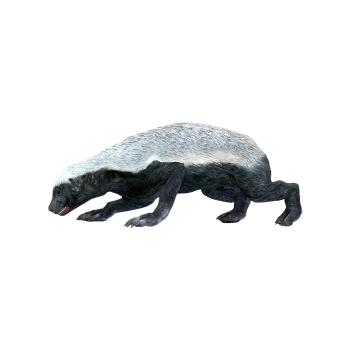
Honey Badger (3D animated model)
192 View
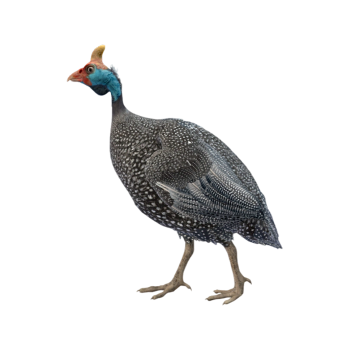
Guinea fowl (3D animated model)
163 View
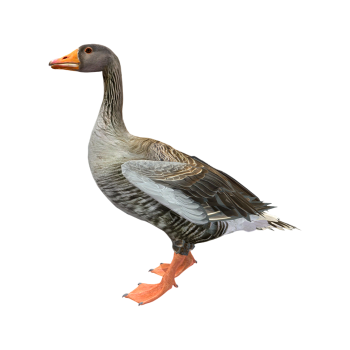
Wild Goose (3D animated model)
185 View

Red Fox (3D animated model)
153 View
Random Model


Red Fire Ant 3D Model Animation
1024 View

Cloth bag monk stone statue
761 View


Fried Bull Skirt with Beet Leaf
802 View

Withered leaves, big knives, mantis
898 View


Angel "
808 View
